Security Implications of AI Usage in Government Strategic Decission Making in UAE
(Vol. 6 No. 2, 2025. Security Science Journal)
Authors:
Ibrahim Alhudaidi
School of Engineering Management, University „Union – Nikola Tesla“
Vladimir Tomašević
School of Engineering Management, University „Union – Nikola Tesla“
Sandra Božić
School of Engineering Management, University „Union – Nikola Tesla“
DOI: https://doi.org/10.37458/ssj.6.2.6
Review Paper
Received: September 22, 2025
Accepted: November 1, 2025
Abstract:The implementation of artificial intelligence (AI) in the public sector represents a significant step toward improving governmental decision-making processes. AI systems reduce human errors, enable faster and more accurate analysis of large data volumes, and increase efficiency in crisis situations. A key aspect lies in creating strategic frameworks that foster transparency, accountability, and objectivity within government institutions. This study aims to explore the impact of AI systems on optimizing strategic decision-making and to analyze the strategies that governmental stakeholders may apply for successful implementation. The general hypothesis assumes that the use of AI positively affects strategic decision-making, while the specific hypotheses address the reduction of human errors and the protection of citizens’ privacy as key factors for effective implementation. The theoretical and practical contribution of the study lies in the potential to improve governance practices in the public sector, increase citizens’ trust, and enhance the creation of sustainable public value.
Keywords: artificial intelligence, decision-making, public sektor, transparency, accountability, privacy

Introduction
The contemporary development of technology significantly influences the transformation of the public sector and the improvement of decision-making processes in governmental institutions. In this context, a special role is played by artificial intelligence (AI) systems, which enable the analysis of large volumes of data, the reduction of human errors, and the making of more accurate and objective decisions (Zuiderwijk et al., 2021; Taeihagh, 2021). Artificial intelligence encompasses a set of technologies that imitate human cognitive processes, particularly reasoning, thereby contributing to the development of an efficient strategic framework to support state actors across different sectors. The existing literature emphasizes that traditional theoretical models of strategic security management, although useful, often rely on assumptions of ideal political and social circumstances, which complicate their practical application (Ingrams et al., 2024). Therefore, it is of particular importance to explore how concrete strategies for introducing AI systems can be applied in complex social and political environments, as well as which organizational and technical prerequisites enable their successful implementation (Mutitu, 2024). The advantages of applying AI systems in the public sector are reflected in their ability to process complex and extensive data, recognize patterns that are not visible to human analysts, and automate tasks that were previously time-consuming and prone to error (Crawford & Schultz, 2019; Zahra & Nurmandi, 2021). This allows governmental institutions to make evidence-based decisions, which increases transparency, accountability, and citizens’ trust in public administration (Criado & Gil-Garcia, 2019; Felzmann et al., 2019). Emphasis is placed on the importance of integrating data analytics and AI systems, as their combination provides enhanced predictive power and a greater capacity for governments to identify risks, anticipate trends, and design policies that meet societal needs (Guo, 2024). At the same time, the responsible application of AI must include the protection of citizens’ privacy, which is essential for maintaining trust and the legitimacy of public institutions (Wilner, 2018). The aim of this paper is to examine the impact of applying artificial intelligence on optimizing the processes of strategic decision-making at the level of governments and public institutions. In addition, the paper seeks to analyze the strategies that governmental actors can adopt to achieve efficient, responsible, and sustainable implementation of AI systems. Starting from the general hypothesis that the introduction of artificial intelligence positively affects the quality of strategic decision-making, the paper also considers specific aspects such as the reduction of human errors and the protection of citizens’ privacy. In this way, the research contributes to the theoretical understanding of the role of AI in the public sector while also providing practical guidelines for decision-makers, with the aim of designing more effective policies and improving the process of digital transformation in governments.
AI Systems in Public Administration: Conceptual Foundations and Strategic Implication
In the context of this research, which focuses on the functioning of governmental organizations, it is crucial to undestand the specific characteristics of public sector organizations. Public institutions are recognized as complex information-processing systems, used to make informed and transparent decisions (Zahra & Nurmandi, 2021). The proposed framework of this study views organizations as open systems that transform inputs into outputs (Guo, 2024). While inputs are related to the collection of relevant information and social factors, outputs are dynamic and focused on achieving public interest (diagram 1).
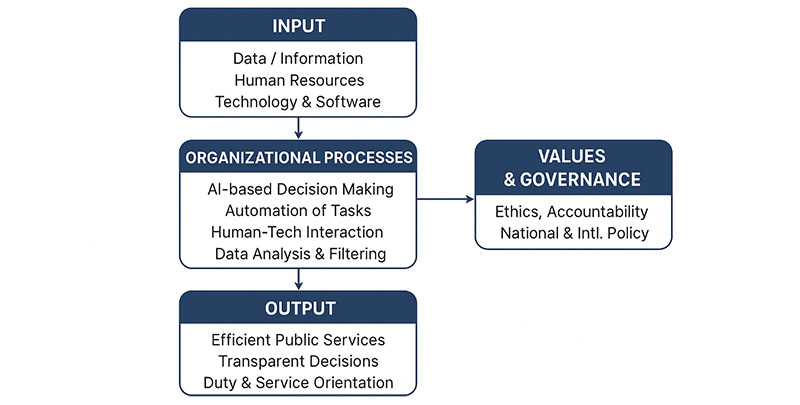
Diagram 1. Conceptual Framework for AI in Public Sector Organizations (authors)
While inputs are related to the collection of relevant information and social factors, outputs are dynamic and focused on achieving public sector.
Decisions play a key role in the theoretical model of public sector functioning. Given the complexity of organizational processes in governmental institutions, numerous decisions must be carefully considered to meet the needs of all key stakeholders (Reis et al., 2019). Recognizing priorities in decision-making enables the achievement of desired outcomes (Guo, 2024). The application of AI systems in governmental institutions can significantly enhance decision-making capacity.
Values represent another important element of the conceptual framework. Automated systems in public organizations do not possess their own perception of importance (Vassilakopoulou et al., 2023; Zahra & Nurmandi, 2021); rather, the perception of value priorities in AI systems results from human intervention (Guo, 2024). Some studies indicate that these systems should be further improved to exert a stronger influence on users.
The interaction between technology and humans is another key component of the framework. It takes place within a specific organizational structure (Magliocca et al., 2025; Vassilakopoulou et al., 2023; Reis et al., 2019), where humans represent the government workforce, and technology provides optimal solutions to increase employee motivation and productivity.
The application of the Resource-Based View (RBV) framework further explains key issues in implementing AI solutions in governmental institutions. RBV emphasizes the importance of allocating IT resources to enhance organizational processes (Khalifa et al., 2025). Organizations should use their resources to create value, with key resource sources being those that provide solutions that are rare, practical, and useful (Jungherr, 2023; Alkausar et al., 2025). Applying RBV in the public sector can provide a competitive advantage and improve capacity for AI technology adoption (Zheng et al., 2013; Pencheva et al., 2020).
Resources, according to RBV, are divided into three main categories: physical resources and data, intangible resources, and employee skills and knowledge. Physical resources include relevant data that enable AI application in governmental organizations (Archana, 2025; Redden, 2018). Intangible resources relate to improving organizational climate and culture, while employee skills and knowledge play a critical role in AI implementation (Archana, 2025; Dasgupta & Gupta, 2009).
Regulatory frameworks, such as the United Nations Principles for the Ethical Application of AI, enable the development of core infrastructure for AI implementation in governmental institutions (“United Nations System,” 2022). A similar framework is the AI Governance Framework Model from Singapore, emphasizing human oversight and ethical technology application in practice (Gudepu & Eichler, 2024).
AI Systems as Tools for Intelligent Decision-Making and Public Service
AI systems are crucial for problem-solving and decision-making by imitating human cognition. They enable modeling, decision support, and control in various domains, from healthcare to manufacturing (Chen et al., 2024; Kiradoo, 2018). The advantages of AI systems include persistent memory and information processing, faster decision-making, error reduction, and multitasking capabilities (Ruvalcaba-Gomez, 2025; Broeker et al., 2018; Binder et al., 2022). In the healthcare sector, AI enhances clinical processes, enables personalized care, and reduces human errors, while in manufacturing, it contributes to labor cost reduction and performance improvement through automation and innovation (Zahra & Nurmandi, 2021).
Duty orientation refers to the commitment of individuals and organizations to serve the public, respect rules and principles, and be willing to make sacrifices to accomplish tasks (Zahra & Nurmandi, 2021). The integration of AI systems into public administration can enhance this orientation through ethical principles, transparency, and accountability (Archana, 2025; Vatamanu & Tofan, 2025). An example of implementation is the UK, which applies AI through regulatory principles such as safety, transparency, fairness, accountability, and the ability to challenge decisions, ensuring the ethical use of AI in public institutions.
Service orientation refers to a focus on users, including citizens, partners, and other institutions. AI can improve efficiency, accuracy, and quality of public services, enable faster decision-making, and support innovative approaches in public administration (Ingrams et al., 2024). The German government represents an example of strategic AI application through education, research, knowledge transfer, and regulation, ensuring AI capacity development, data protection, and improved public services.
Research Methodology
The research methodology employed in this study is based on mixed methods, which combine quantitative and qualitative approaches to data collection and analysis. Combining these methods allows the researcher to address the research questions more comprehensively. The main idea behind mixed methods is to ensure data integration throughout the research process. This study emphasizes the need to explore the phenomenon from multiple perspectives, meaning that using various research lenses improves both data collection and analysis. Quantitative and qualitative information helps the researcher present conclusions that provide a detailed answer to the research questions. The rationale for conducting this research is based on collecting detailed information about the specificities of AI systems and how they can be efficiently implemented to improve strategic decision-making processes within government organizations in the UAE. Given the adoption of mixed methods, the positivist and interpretivist research philosophies are considered appropriate for guiding the data collection and analysis processes. Positivism aims to present different causal relationships between the variables identified in the research (Paul, 2017). The positivist approach assumes that an objective reality exists and can be measured, and that knowledge is developed objectively because the researcher does not influence the process of obtaining results. Interpretivism, associated with qualitative research, assumes that reality is subjective and socially constructed. Understanding an individual's reality is possible through their personal experiences (Paul, 2017). Qualitative researchers value differences among individuals, allowing them to derive various meanings regarding the phenomenon under investigation.
For the quantitative part of the study, the sample consists of 250 participants, including administrative employees, managers, and supervisors working in government organizations in the UAE. Demographic data indicate that 170 participants are male and 80 are female. Most participants hold higher education degrees, primarily Bachelor’s and Master’s. The participants’ age groups are: 21–31, 32–42, 43–53, and 50+ years. For the qualitative part, the sample includes 10 technology experts who provide key insights into AI system implementation at the government level. Surveys employed a random sampling technique, ensuring that each individual in the selected organization had an equal chance of being included (Lavrakas et al., 2019). Interviews used a convenience sampling technique, where participants were selected based on accessibility to the researcher.
Quantitative data were collected through surveys, which provide statistically significant results due to the larger sample size. Surveys were distributed online for participants’ convenience and to obtain immediate results. Qualitative data were collected via semi-structured interviews. Open-ended questions allowed participants to freely express their views on the research problem. A prepared interview guide helped the researcher steer the conversation without affecting the objectivity of constructing social reality.
Quantitative data were collected by distributing surveys to employees in various government organizations. Qualitative data were collected through interviews with experts, scheduled in advance with informed consent. The study was conducted over a three-month period, following ethical principles to protect participants and ensure data confidentiality.
For the quantitative data, descriptive statistics, including measures such as the mean, variance, and frequency, were employed to identify patterns and highlight the key characteristics of the dataset. This approach enabled a comprehensive understanding of the data and facilitated the identification of trends and relationships among variables. In contrast, the qualitative data were analyzed using thematic analysis, which allowed for the systematic identification and interpretation of patterns of meaning within the interview transcript. This method provided insights into participants’ perspectives and experiences, supporting a deeper understanding of the research phenomenon.
Validity was ensured by confirming that the research instruments accurately measured the intended variables and that the collected data were correctly interpreted (Clark et al., 2008). Reliability was maintained by ensuring consistency of the results and the potential for replication, with particular attention given to test-retest reliability and inter-rater reliability to verify the stability and agreement of measurements across different occasions and evaluators.
Participants signed an informed consent form, outlining the objectives and scope of the study. Participants were allowed to withdraw at any time without consequences. Data integrity, confidentiality, and protection of participants were ensured, with no harm caused to anyone involved. Research Aim: To investigate the impact of AI systems on improving strategic decision-making processes in government organizations.
Hypotheses:
H1: The implementation of AI systems positively affects the quality of strategic decision-making.
H2: AI integration reduces human errors in decision-making processes.
H3: AI system implementation contributes to increased efficiency and transparency in government organizations.
H4: Compliance with privacy and ethical principles by AI systems increases citizens’ trusin public institutions.
Results
This chapter presents the results of the study, including both quantitative survey data and qualitative insights from expert interviews. The goal is to provide a comprehensive overview of how artificial intelligence (AI) systems impact decision-making processes within government organizations. The survey was completed by 250 participants from various UAE government organizations, with a balanced representation of managerial and operational roles. Reliability analysis indicated high internal consistency, with a Cronbach’s Alpha value of 0.842. Descriptive statistics show that participants perceive AI systems as highly beneficial in improving decision-making quality, efficiency, and transparency.
|
Dimension
|
Mean
|
Std. Dev
|
% Agree/Strongly Agree
|
|
Improvement in decision quality
|
4.21
|
0.73
|
62%
|
|
Increase in efficiency
|
4.05
|
0.81
|
58%
|
|
Transparency of decisions
|
4.08
|
0.79
|
60%
|
|
Trust in government organizations
|
3.97
|
0.85
|
55%
|
|
Willingness to adopt AI systems
|
4.12
|
0.76
|
61%
|
Table 1. Perceptions of AI Impact on Government Decision-Making (authors)
The results indicate that the majority of respondents agree that AI systems enhance decision quality and efficiency. Regression analysis demonstrated a statistically significant positive effect of AI adoption on strategic decision-making (β = 0.43, p < 0.01). Paired sample t-tests revealed significant differences between participants’ pre- and post-exposure perceptions, particularly in terms of trust, transparency, and accountability.
Semi-structured interviews were conducted with 10 technology experts to gain deeper insights into AI implementation challenges and benefits. Key themes identified include:
• Smart Governance and Strategic Planning – Experts emphasized AI’s role in supporting strategic initiatives, long-term planning, and proactive policy design.
• Citizen Participation and Engagement – AI systems enable governments to respond more effectively to citizen feedback and enhance participatory decision-making.
• Transparency and Accountability – AI fosters data-driven decision-making, reducing human bias and increasing organizational accountability.
• Challenges and Recommendations – Experts highlighted the importance of proper data governance, ethical AI use, staff training, and clear strategic objectives to maximize benefits.
Quotes from participants illustrate these findings:
“AI allows us to simulate policy outcomes before implementation, which significantly reduces risk and increases confidence in our decisions.” – Expert 3
“Without clear objectives and proper integration, AI systems can create more confusion than clarity in decision-making processes.” – Expert 7
Combining quantitative and qualitative findings, the study confirms that AI adoption enhances the quality, efficiency, and transparency of government decision-making. While quantitative data shows measurable improvements in decision-related outcomes, qualitative insights explain the mechanisms behind these effects and highlight organizational and strategic factors critical for successful AI integration. Overall, results indicate that AI adoption in government organizations leads to reduced human error in decision-making, improved strategic planning capabilities, enhanced transparency and accountability and increased trust and confidence among citizens and stakeholders. The findings support the study’s hypotheses and provide a strong empirical basis for recommendations on AI implementation in government contexts.
The descriptive statistics summarized in Table 2 provide a detailed overview of participants’ perceptions regarding the impact of AI systems on government decision-making. The table presents the mean scores, standard deviations, and the percentage of respondents who agreed or strongly agreed with each dimension, highlighting areas where AI adoption is perceived as most beneficial. These results offer a clear visual representation of the survey data, complementing the textual summary provided above.
|
Dimension
|
Mean
|
Std. Dev
|
% Agree/Strongly Agree
|
|
Improvement in decision quality
|
4.21
|
0.73
|
62%
|
|
Increase in efficiency
|
4.05
|
0.81
|
58%
|
|
Transparency of decisions
|
4.08
|
0.79
|
60%
|
|
Trust in government organizations
|
3.97
|
0.85
|
55%
|
|
Willingness to adopt AI systems
|
4.12
|
0.76
|
61%
|
Table 2. Participants’ Perceptions of AI Impact on Government Decision-Making (authors)
Overall, the results provide strong evidence that AI systems positively influence government decision-making across multiple dimensions, including efficiency, transparency, accountability, and citizen engagement. The convergence of quantitative and qualitative findings indicates that AI adoption not only improves measurable outcomes but also supports more informed, objective, and strategic decision-making processes. Moreover, the post-exposure responses demonstrate a notable shift in perceptions, reflecting increased trust and willingness among employees to engage with AI-enabled systems. These findings underscore the critical role of proper implementation strategies, data governance, and staff training in maximizing the benefits of AI in government organizations. In conclusion, the study offers a comprehensive understanding of how AI can transform public sector decision-making while highlighting practical considerations for successful adoption.
Discussion
The results of this study provide strong evidence that the implementation of artificial intelligence (AI) systems significantly enhances strategic decision-making processes in government organizations. Both quantitative and qualitative data converge to demonstrate improvements across multiple dimensions, including decision quality, efficiency, transparency, accountability, and citizen engagement. These findings corroborate the theoretical framework proposed in this study, highlighting the value of AI systems as tools for intelligent decision-making and the importance of organizational and technical prerequisites for successful implementation.
The quantitative findings indicate that participants perceive AI as highly beneficial in improving decision-making quality, with a mean score of 4.21 and 62% agreement on this dimension. Similarly, efficiency, transparency, and trust were rated positively, which aligns with prior studies emphasizing AI’s potential to reduce human error, process large data volumes, and enhance evidence-based decision-making (Crawford & Schultz, 2019; Guo, 2024; Zuiderwijk et al., 2021). The significant positive effect of AI adoption on strategic decision-making, revealed through regression analysis (β = 0.43, p < 0.01), supports the initial hypothesis (H1) that AI integration contributes to better quality decisions within public institutions. This outcome demonstrates that AI does not merely automate tasks but actively supports more informed and objective policy-making, consistent with findings in other public sector contexts (Taeihagh, 2021; Felzmann et al., 2019).
The post-exposure survey responses, presented in Table 2, further highlight the transformative impact of AI on employees’ perceptions. The marked increase in agreement regarding transparency, accountability, and trust suggests that exposure to AI systems reinforces confidence in the decision-making process. These results support H3 and H4, indicating that AI adoption not only improves operational efficiency but also fosters trust in government organizations and promotes ethical compliance and citizen-oriented governance (Wilner, 2018; Archana, 2025).
Qualitative insights from expert interviews complement the quantitative data by elucidating the mechanisms behind these improvements. Experts emphasized AI’s role in strategic planning and proactive policy design, highlighting that intelligent systems allow governments to simulate outcomes and anticipate risks before implementing policies. This aligns with the Resource-Based View (RBV) framework discussed in Chapter 2, where the effective allocation of IT resources and the integration of organizational knowledge enable AI to create strategic value and competitive advantage in public administration (Khalifa et al., 2025; Zheng et al., 2013). Additionally, experts noted that citizen participation and engagement are enhanced through AI-enabled systems, which facilitate the collection and analysis of feedback, thereby supporting more participatory decision-making processes.
Despite the overall positive impact, the study also highlights critical challenges that must be addressed to ensure the successful adoption of AI in government organizations. These include establishing proper data governance protocols, ensuring ethical AI usage, providing adequate staff training, and defining clear strategic objectives. The qualitative feedback underscores that without careful planning and integration, AI systems can lead to confusion and inefficiencies, emphasizing the importance of organizational readiness as a prerequisite for AI adoption (Mutitu, 2024; Vassilakopoulou et al., 2023).
Moreover, the findings suggest a strong alignment with theoretical perspectives on public sector digital transformation. The integration of AI enhances both duty and service orientation in government institutions, promoting ethical responsibility, transparency, and efficiency while supporting citizen-centric service delivery (Zahra & Nurmandi, 2021; Ingrams et al., 2024). The post-exposure improvements in employee perceptions highlight that hands-on experience with AI systems is critical for realizing these benefits, pointing to the importance of training and change management programs during implementation.
Finally, the study contributes to the literature by providing empirical evidence on the multifaceted benefits of AI in government organizations while addressing specific practical implications. The results indicate that AI adoption is not solely a technological upgrade but a strategic transformation requiring organizational, cultural, and regulatory alignment. These insights can guide policymakers in designing AI integration strategies that maximize efficiency, transparency, and trust, while simultaneously mitigating potential risks related to privacy and ethical considerations.
In conclusion, this study demonstrates that AI systems are powerful enablers of intelligent decision-making in the public sector. The convergence of quantitative and qualitative findings underscores the importance of comprehensive implementation strategies, highlighting that AI adoption can significantly enhance decision-making quality, operational efficiency, transparency, accountability, and citizen engagement. These findings provide a strong empirical basis for future research and offer practical guidelines for governments seeking to leverage AI to improve strategic governance outcomes.
Implications for Future Research
The findings of this study indicate that artificial intelligence (AI) systems have significant potential to enhance strategic decision-making within government organizations. However, despite these promising outcomes, several limitations should be acknowledged, which also provide directions for future research.
Firstly, the study was conducted within government organizations in the UAE, which may limit the generalizability of the results to other countries or cultural contexts. The regulatory, technological, and organizational environments differ across regions, and the effectiveness of AI systems in decision-making could vary accordingly. Future research could extend the analysis to multiple countries, enabling cross-cultural comparisons and the identification of context-specific strategies for AI implementation.
Secondly, the sample size for the qualitative component was limited to 10 technology experts. While these interviews provided rich insights into AI adoption strategies and challenges, a larger and more diverse sample of experts could capture a broader spectrum of perspectives. Future studies could include stakeholders from various hierarchical levels, sectors, or international institutions to validate and expand upon these findings.
Thirdly, although mixed methods were used, the quantitative survey relied on self-reported perceptions of employees regarding AI effectiveness. This introduces the possibility of response bias or socially desirable answers. Future research could complement surveys with objective performance metrics, such as decision accuracy, processing time, or policy outcomes, to measure the impact of AI more empirically.
Another limitation relates to the focus on strategic decision-making at the organizational level. While this study highlights improvements in efficiency, transparency, and trust, future research could explore AI’s impact on specific policy domains, such as healthcare, transportation, or emergency management, to examine domain-specific benefits and challenges.
Finally, the research explored AI implementation in the context of existing IT infrastructure and human resources. The rapid evolution of AI technologies means that future studies should investigate how emerging AI capabilities, such as generative AI, machine learning explainability, or neuromorphic systems, influence strategic decision-making and public service delivery. Longitudinal studies could also assess the sustainability of AI’s impact over time and how organizations adapt to continuous technological change.
In conclusion, while this study provides valuable evidence of AI’s benefits for public sector decision-making, future research should consider broader contexts, diverse stakeholder perspectives, objective performance measures, domain-specific applications, and evolving AI technologies. Such efforts will help refine theoretical frameworks, guide practical AI implementation, and contribute to the development of sustainable, ethical, and citizen-centered governance.
Conclusion
This study examined the impact of artificial intelligence (AI) systems on strategic decision-making processes within government organizations, with a particular focus on enhancing efficiency, transparency, accountability, and citizen engagement. The findings indicate that AI adoption significantly improves decision quality, reduces human errors, and strengthens trust in public institutions. Both quantitative and qualitative evidence confirmed that AI systems enable governments to process large volumes of data, anticipate risks, and simulate policy outcomes before implementation, thereby facilitating more informed, objective, and evidence-based decisions. The research contributes to the existing literature by providing empirical evidence of AI’s transformative potential in the public sector. It demonstrates that AI adoption is not merely a technological upgrade but a strategic organizational transformation that requires alignment of resources, human expertise, and ethical frameworks. The study also highlights practical strategies for successful implementation, including the importance of staff training, clear strategic objectives, and data governance protocols, offering guidance for policymakers and public sector managers seeking to leverage AI effectively. Additionally, the study’s conceptual framework and mixed-methods approach provide a comprehensive understanding of the mechanisms through which AI influences decision-making, bridging the gap between theoretical models and practical applications. By integrating human and technological perspectives, the research underscores the critical role of responsible AI deployment in achieving sustainable, citizen-centered governance. Despite its contributions, the study acknowledges limitations, such as its focus on the UAE context, the reliance on self-reported survey data, and a relatively small qualitative sample. These limitations suggest directions for future research, including cross-country studies, domain-specific analyses, and longitudinal assessments of AI’s impact over time. In conclusion, this research offers both theoretical and practical insights into the role of AI in the public sector, demonstrating its capacity to enhance strategic decision-making, foster transparency, and strengthen public trust. The findings serve as a foundation for future studies and provide actionable recommendations for governments aiming to implement AI responsibly and effectively.
References
- 1. Alkausar, B., Soemarsono, P. N., Wulandari, A., Pangesti, N. G., & Pertiwi, A. R. (2025). The Role of Technology Adoption in the Relationship Between MAP and MSMEs Financial Performance Based on the Resource-Based View Theory. Journal of Multiperspectives on Accounting Literature, 3(2).
- 2. Apell, P., & Eriksson, H. (2023). Artificial intelligence (AI) healthcare technology innovations: the current state and challenges from a life science industry perspective. Technology Analysis & Strategic Management, 35(2), 179-193.
- 3. Archana, T. (2025). Artificial intelligence (AI) and digital competencies in the public sector. In Digital competency development for public officials: Adapting new technologies in public services (pp. 95-120). IGI Global Scientific Publishing.
- 4. Binder, C., Neureiter, C., & Lüder, A. (2022). Towards a domain-specific information architecture enabling the investigation and optimization of flexible production systems by utilizing artificial intelligence. The International Journal of Advanced Manufacturing Technology, 123(1), 49-81.
- 5. Broeker, L., Liepelt, R., Poljac, E., Künzell, S., Ewolds, H., de Oliveira, R. F., & Raab, M. (2018). Multitasking as a choice: A perspective. Psychological Research, 82(1), 12-23.
- 6. Chen, J., Yuan, Y., Ziabari, A. K., Xu, X., Zhang, H., Christakopoulos, P., ... & Advincula, R. (2024). AI for Manufacturing and Healthcare: a chemistry and engineering perspective. arXiv preprint arXiv:2405.01520.
- 7. Clark, V. L. P., Creswell, J. W., Green, D. O. N., & Shope, R. J. (2008). Mixing quantitative and qualitative approaches. Handbook of emergent methods, 363, 363-387.
- 8. Corvalán, J. G. (2018). Digital and intelligent public administration: Transformations in the era of artificial intelligence. A&C-Revista de Direito Administrativo & Constitucional, 18(71), 55-87.
- 9. Crawford, K., & Schultz, J. (2019). AI systems as state actors: On the power of prediction. Columbia Law Review, 119(7), 1941–1972.
- 10. Criado, J. I., & Gil-Garcia, J. R. (2019). Creating public value through smart technologies and strategies: From digital services to artificial intelligence and big data. International Journal of Public Sector Management, 32(5), 438–450.
- 11. Dasgupta, M., & Gupta, R. K. (2009). Innovation in organizations: A review of the role of organizational learning and knowledge management. Global Business Review, 10(2), 203-224.
- 12. Felzmann, H., Fosch-Villaronga, E., Lutz, C., & Tamo-Larrieux, A. (2019). Robots and transparency: The multiple dimensions of transparency in the context of robot technologies. IEEE Robotics & Automation Magazine, 26(2), 71–78.
- 13. Gavighan, C., Knott, A., Maclaurin, J., Zerilli, J., & Liddicoat, J. (2019). Government use of artificial intelligence in New Zealand.
- 14. Gudepu, B. K., & Eichler, R. (2024). The role of AI in enhancing data governance strategies. International Journal of Acta Informatica, 3(1), 169-186.
- 15. Guo, Y. (Ed.). (2024). Digital Government and Public Interaction: Platforms, Chatbots, and Public Satisfaction: Platforms, Chatbots, and Public Satisfaction. IGI Global.
- 16. Ingrams, A., Piotrowski, S. J., & Berliner, D. (2024). Transnational approaches to improving public services: the case of the open government partnership. In Pathways to Positive Public Administration (pp. 300-319). Edward Elgar Publishing.
- 17. Jungherr, A. (2023). Artificial intelligence and democracy: A conceptual framework. Social media+ society, 9(3), 20563051231186353.
- 18. Khalifa, G. S., Alkheyi, A. A., Hossain, M. S., Alneadi, K. M., El-Aidie, S., & Alhaj, B. K. (2025). Organisational performance from a resource-based view: a study of public service sector in the United Arab Emirates. International Journal of Public Sector Performance Management, 15(1), 90-109.
- 19. Kiradoo, G. (2018). Role of Application of Artificial Intelligence (AI) and its Importance in the Healthcare Industry. International Journal of Advanced Research in Engineering and Technology, 9(2).
- 20. Lavrakas, P. J., Traugott, M. W., Kennedy, C., Holbrook, A. L., de Leeuw, E. D., & West, B. T. (Eds.). (2019). Experimental methods in survey research: Techniques that combine random sampling with random assignment. John Wiley & Sons, Hoboken.
- 21. Magliocca, P., Canestrino, R., Carayannis, E. G., & Gagliardi, A. R. (2025). Understanding human–technology interaction: evolving boundaries. European Journal of Innovation Management, 28(5), 2006-2028.
- 22. Mutitu, K. A. (2024). The impact of artificial intelligence on corporate governance: ethical implications and governance challenges. Europe, 45, 35.
- 23. Paul, K. B. (2017). Introducing interpretive approach of phenomenological research methodology in environmental philosophy: A mode of engaged philosophy in the Anthropocene. International Journal of Qualitative Methods, 16(1), 1609406917724916.
- 24. Pencheva, I., Esteve, M., & Mikhaylov, S. J. (2020). Big Data and AI–A transformational shift for government: So, what next for research?. Public Policy and Administration, 35(1), 24-44.
- 25. Redden, J. (2018). Democratic governance in an age of datafication: Lessons from mapping government discourses and practices. Big Data & Society, 5(2), 2053951718809145.
- 26. Reis, J., Santo, P. E., & Melão, N. (2019). Artificial intelligence in government services: A systematic literature review. In World conference on information systems and technologies (pp. 241-252). Springer, Cham.
- 27. Ruvalcaba-Gomez, E. A. (2025). Systematic and axiological capacities in artificial intelligence applied in the public sector. Public Policy and Administration, 40(2), 351-371.
- 28. Taeihagh, A. (2021). Governance of artificial intelligence. Policy and Society, 40(2), 137-157.
- 29. Vassilakopoulou, P., Haug, A., Salvesen, L. M., & Pappas, I. O. (2023). Developing human/AI interactions for chat-based customer services: lessons learned from the Norwegian government. European journal of information systems, 32(1), 10-22.
- 30. Vatamanu, A. F., & Tofan, M. (2025). Integrating artificial intelligence into public administration: Challenges and vulnerabilities. Administrative Sciences, 15(4), 149.
- 31. Zheng, D., Chen, J., Huang, L., & Zhang, C. (2013). E-government adoption in public administration organizations: integrating institutional theory perspective and resource-based view. European Journal of Information Systems, 22(2), 221-234.
- 32. Zuiderwijk, A., Chen, Y.C., Salem, F. (2021). Implications of the use of artificial intelligence in public governance: A systematic literature review and a research agenda. Government Information Quarterly, 38(3), 101577.
- 33. Wilner, A. S. (2018). Cybersecurity and its discontents: Artificial intelligence, the Internet of Things, and digital misinformation. International Journal, 73(2), 308-316.
- 34. Zahra, A. A., & Nurmandi, A. (2021, March). The strategy of develop artificial intelligence in Singapore, United States, and United Kingdom. In IOP Conference Series: Earth and Environmental Science (Vol. 717, No. 1, p. 012012). IOP Publishing.